
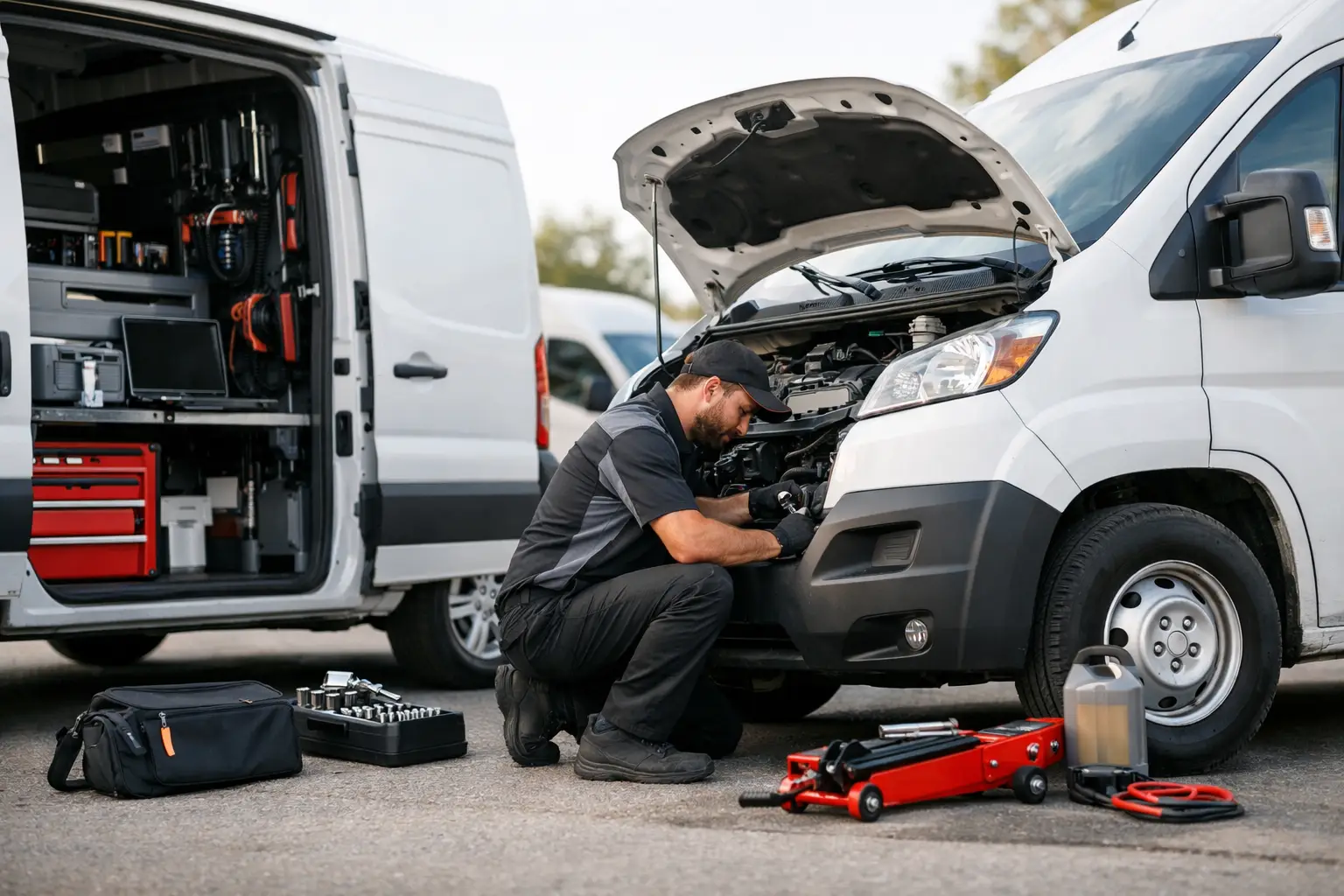
When your van is parked outside a customer’s property, on a busy job site or at your depot, losing half a day to a garage visit can hurt. So, can a mechanic service vans onsite? In many cases, yes. A properly equipped mobile mechanic can carry out routine servicing, diagnostics and a wide range of repairs at your home, workplace or fleet yard, helping you keep the vehicle earning.
The key is knowing which work is suitable for mobile servicing and when the safer, more efficient option is to bring the van into a garage. A good mechanic will be straight with you about that from the start.
Can a mechanic service vans onsite safely?
Yes, provided the location is safe, accessible and appropriate for the job. Mobile van servicing is not a cut-down version of garage work. A skilled technician can arrive with diagnostic equipment, service parts, fluids, filters, tools and the practical experience to inspect the vehicle properly.
For a standard service, this can mean changing the engine oil and filter, replacing air, fuel or cabin filters where required, checking brakes, tyres, suspension components, lights, battery condition and fluid levels, then resetting the service indicator. Onsite diagnostics can also identify warning-light faults, starting problems, charging faults and many engine management issues.
For tradespeople and delivery drivers, that convenience matters. Rather than taking the van off the road, arranging another driver and waiting in a reception area, the work can be completed while you are at home, working on site or running your business.
That said, mobile work still has to be carried out correctly. The vehicle needs level, firm ground and enough room for the mechanic to work safely. A roadside lay-by, a sloped driveway or a tight city-centre parking space may not be suitable, particularly if the repair involves raising the vehicle.
What work can be done at your premises?
Most planned maintenance is well suited to an onsite visit. The same applies to many common faults that stop a van doing its job but do not require a vehicle lift or heavy workshop equipment.
A mobile mechanic can often carry out van servicing, brake pad and disc replacement, battery replacement, alternator and starter motor diagnosis, suspension checks, fault-code reading, sensor replacement, DPF-related diagnostics and minor repairs. Air conditioning faults can also be assessed onsite, although the exact repair depends on the equipment needed and the source of the leak or failure.
For fleet operators, mobile inspections are particularly useful. Having several vans checked and serviced at one location can reduce individual trips to a garage and make maintenance planning far less disruptive. It also gives you a clearer view of what needs attention now and what can be booked before it becomes a breakdown.
Diagnostics are more than plugging in a scanner
Modern vans rely heavily on electronics. A dashboard warning light may point to a sensor, but it could also be caused by a wiring issue, low system voltage, a blocked component or a fault elsewhere in the system. Reading a code is the beginning of diagnosis, not the finished answer.
This is especially relevant for Mercedes-Benz vans. Engines such as the OM651 and OM654 need accurate diagnosis and an understanding of common faults, service requirements and live data. An onsite mechanic with the right equipment can establish whether the van can be repaired where it is or whether workshop testing is the sensible next step.
When does a van need to go to the garage?
Some jobs are better handled in a controlled workshop environment. This is not about making the job more complicated than it needs to be. It is about doing it safely, properly and without wasting your time or money.
Repairs involving major engine work, gearbox removal, clutch replacement, extensive suspension repairs or anything needing a ramp will usually require a garage. A vehicle lift gives safe access underneath the van and allows components to be removed, inspected and refitted to the correct standard.
The same applies when a fault needs specialist equipment, deeper strip-down or repeat testing. For example, a suspected wet belt issue on a Transit is not a repair to rush on a driveway. It needs the correct procedure, clean working conditions and the right technical support. If the belt has begun to degrade, dealing with it promptly can prevent far more expensive engine damage.
MOT tests must also be carried out at an authorised test station. A mobile mechanic can inspect the van beforehand, identify likely failure points and complete suitable MOT preparation work, but the test itself cannot be done at your premises.
A business that offers both mobile support and a local garage gives you a practical advantage here. The initial inspection can happen where the van is parked. If the fault needs ramps, specialist tooling or more time, the repair can move to the workshop without you having to start again with another provider.
What makes an onsite service go smoothly?
A little preparation helps your mechanic get straight to work. When booking, explain the van’s make, model, registration, mileage, engine type and the issue you have noticed. Mention any warning lights, unusual noises, smoke, loss of power or recent work carried out. Clear information helps ensure the correct parts and equipment are brought to the job.
On the day, leave the keys available and make sure the van is somewhere accessible. If it is parked at a work site, confirm that the mechanic can enter and that there is space around the vehicle. For a service, the engine should ideally be cool enough to work on safely, although an experienced technician will advise what is practical.
It is also worth being realistic about timing. A routine service may be straightforward, but a diagnostic appointment can uncover an underlying fault that needs parts or workshop access. The right outcome is not always the quickest possible fix. It is the repair that gets the van back on the road safely and reduces the chance of another avoidable stop a few days later.
Mobile servicing versus a garage visit
The choice usually comes down to the type of work, the condition of the vehicle and the urgency. Mobile servicing is ideal when the van is driveable, the repair is suitable for the location and downtime is the main concern. It is also useful when a no-start fault or warning light needs professional attention before you decide whether recovery is necessary.
A garage visit is the better route for complex repairs, jobs requiring a ramp or situations where the van needs extensive investigation. It can also be more cost-effective than trying to force a difficult repair into an unsuitable space. Honest advice matters here: a mechanic should not promise an onsite repair simply because it sounds convenient.
For Glasgow businesses with vans spread across jobs, the best arrangement is often a mix of both. Book routine servicing at your depot or address, use mobile response for urgent faults, and schedule workshop time for bigger jobs before they turn into missed work and recovery bills.
Keeping your van on the road for longer
Onsite servicing works best when it is planned, not only used after something goes wrong. Regular oil changes, brake checks, tyre inspections and diagnostic scans help catch wear early. For working vans that cover high mileages, missed servicing can quickly become costly through poor fuel economy, failed components, downtime and lost bookings.
Van-Tech Fleet Solutions Ltd can assess the job where your vehicle is, then provide garage support in Uddingston when the repair calls for it. That means you are not left guessing whether a warning light is safe to ignore or whether a van needs to come straight off the road.
If your van is due a service, has developed a fault or is costing you time through repeated issues, arrange an inspection before the next job depends on it. A short visit now can be the difference between a planned repair and a very inconvenient breakdown.