
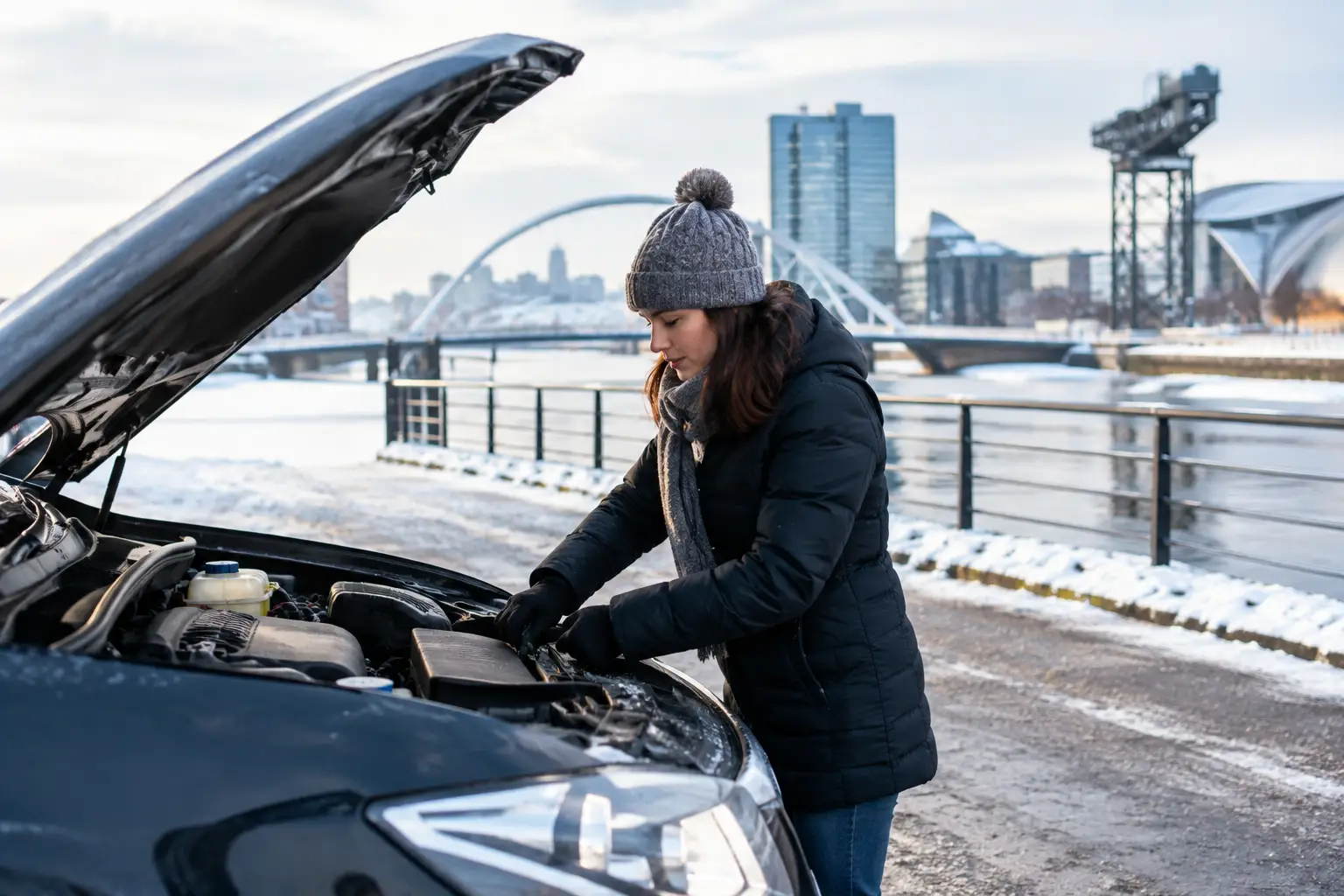
A frosty Glasgow morning can turn a normal school run, site visit or delivery route into a problem before you have left the driveway. Flat batteries, misted screens and tyres struggling for grip are not just inconvenient when the temperature drops – they can put your work, plans and safety at risk. Good Glasgow winter car care is about dealing with the basics before bad weather exposes a weak point.
For drivers who rely on a car or van every day, prevention is usually quicker and cheaper than arranging recovery or losing a day’s work. A few practical checks can make a real difference when rain, ice, standing water and dark evenings arrive together.
Start with the tyres
Your tyres are the only part of the vehicle touching the road, so they deserve first attention. The legal minimum tread depth is 1.6mm across the central three-quarters of the tyre, but that is not a sensible target for winter driving. As tread wears down, the tyre has less ability to clear water from the road surface, increasing the risk of aquaplaning.
Aim to inspect tread depth before winter is fully underway. Many drivers choose to replace tyres closer to 3mm, particularly if they regularly travel early in the morning, cover rural routes or carry tools and stock. Check for cuts, bulges, uneven wear and objects lodged in the tread too. Uneven wear can point to an alignment, suspension or tyre-pressure issue that will only get worse with mileage.
Check pressures when the tyres are cold and use the manufacturer’s recommended settings, which are often listed inside the driver’s door frame or in the handbook. A loaded van may need higher rear pressures than an empty one. Underinflated tyres affect grip, braking, fuel use and tyre life, while overinflation can reduce the contact patch on rough or wet roads.
Winter tyres can be worthwhile for drivers making regular journeys in freezing conditions or on untreated roads. For most Glasgow motorists, good-quality all-season tyres may be the more practical choice, offering useful cold-weather performance without the need for a seasonal swap. It depends on where, when and how far you drive.
Battery checks that prevent a no-start morning
Cold weather places extra strain on a battery. At the same time, your vehicle needs more power for headlights, heated screens, blowers, wipers and demisters. A battery that seems acceptable in mild weather can fail without much warning after a cold night.
Slow cranking, dim interior lights, intermittent electrical faults or a stop-start system that no longer operates normally can all signal a weak battery. Do not assume the battery is the only cause, though. Poor connections, a charging fault or parasitic electrical drain can create similar symptoms.
A proper battery and charging-system test gives a clearer answer than waiting to see whether it starts tomorrow. This matters even more for vans and fleet vehicles, where downtime can mean missed jobs, delayed deliveries and difficult conversations with customers. Keep battery terminals clean and secure, and make sure you have suitable jump leads or a jump pack if your work takes you away from home.
Do not ignore warning lights
If the battery warning light stays on while the engine is running, the issue may be with the alternator or charging system rather than the battery itself. Continuing to drive can leave you stranded once the stored battery power runs out. Get it checked promptly instead of hoping it will clear.
Keep your view clear in every direction
Winter visibility is not only about headlights. It is about seeing clearly through rain, road spray, low sun, fog and darkness, while making sure other road users can see you.
Top up screenwash with a winter-grade product that will not freeze in the reservoir or on the windscreen. Plain water is a false economy in freezing weather. Check that washer jets spray properly and that wiper blades clear water without smearing, juddering or leaving missed areas. Worn blades can make night driving especially tiring when glare from headlights hits a wet screen.
Walk around the vehicle and check all exterior lights: dipped beams, main beams, sidelights, indicators, brake lights, reversing lights and number-plate lights. Clean lenses regularly, as winter road grime quickly cuts light output. If one bulb has failed, replace it as soon as possible. On newer vehicles, a warning message may identify the fault, but a visual check still catches dirty lenses and dim lights.
Before setting off, clear ice and condensation fully from the windscreen, side windows and mirrors. A small clear patch is not enough. Never drive with snow or ice left on the roof, bonnet or lights, where it can slide or blow into another driver’s path.
Fluids, cooling and the parts you cannot see
Your engine needs the correct coolant mixture to protect against freezing, overheating and internal corrosion. Low coolant may indicate a leak, and repeatedly topping it up without finding the cause can lead to a bigger repair later. Only check coolant when the engine is cold, and use the specification suitable for your vehicle. Mixing incorrect coolant types can cause problems.
Engine oil also needs attention. Check the level on level ground, following the procedure in your handbook, and do not let servicing drift just because the vehicle is still running. Old oil, blocked filters and overdue maintenance are more likely to show themselves when engines are used for short, cold journeys.
For diesel vehicles, particularly working vans, give the fuel system some thought. Keeping enough fuel in the tank reduces the chance of being caught short during traffic delays or road closures. If a diesel is struggling to start, running poorly or showing an engine-management warning, arrange diagnosis rather than relying on additives to mask the issue.
Brakes and suspension need winter-ready attention
Wet roads extend stopping distances. Add worn brake pads, tired discs or a brake imbalance and the gap becomes more serious. Listen for grinding, squealing or scraping, and pay attention if the brake pedal feels soft, pulls to one side or needs more pressure than usual. Any change in braking should be inspected without delay.
Suspension problems also affect control. A knocking sound over potholes, a vehicle that bounces excessively, uneven tyre wear or steering that feels vague can indicate worn components. Glasgow’s winter roads are not kind to tyres, springs, bushes and shock absorbers. A pothole strike can damage a tyre or knock tracking out without producing an obvious fault straight away.
If you hit a deep pothole and notice vibration through the steering wheel, a new pulling sensation or a loss of tyre pressure, stop somewhere safe and inspect the tyre. Do not continue on a visibly damaged or flat tyre.
Build a small winter kit around how you travel
A family car used mainly around town needs different preparation from a van covering jobs across the central belt. Still, every vehicle benefits from a few basics: an ice scraper and de-icer, warm waterproof layers, a torch, a mobile phone charging cable, a first-aid kit and a warning triangle where appropriate. For longer trips, add drinking water and a blanket.
Commercial drivers should also think about the equipment needed to protect the job, not just the journey. That might mean a charged jump pack, spare screenwash, suitable PPE and a clear process for reporting defects before a minor issue becomes a roadside breakdown. Fleet checks work best when drivers are encouraged to report concerns early, rather than being expected to carry on regardless.
When to book a winter vehicle check
Book a check before a fault forces the issue if your car or van has slow starting, warning lights, poor heater performance, weak brakes, noisy suspension, worn tyres or overdue servicing. A technician can assess the battery and charging system, tyre condition and pressures, lights, brakes, fluid levels, wipers and visible leaks in one visit.
Mobile support can be useful when a non-start or minor fault leaves the vehicle stuck at home, at work or on site. More involved repairs may need garage equipment, particularly where diagnosis, lifting equipment or specialist parts are required. The priority is getting an accurate answer and keeping unnecessary downtime to a minimum.
Van-Tech Fleet Solutions Ltd supports private drivers and working vehicles across Glasgow and the surrounding area with mobile assistance and garage-based repairs when the job needs it. If something does not feel right, arranging an inspection early is usually the fastest route back to dependable motoring.
The best time to deal with a winter fault is when it is still only a warning sign. Check the vehicle while you can choose the time and place, rather than on a dark, wet morning when you need it most.