
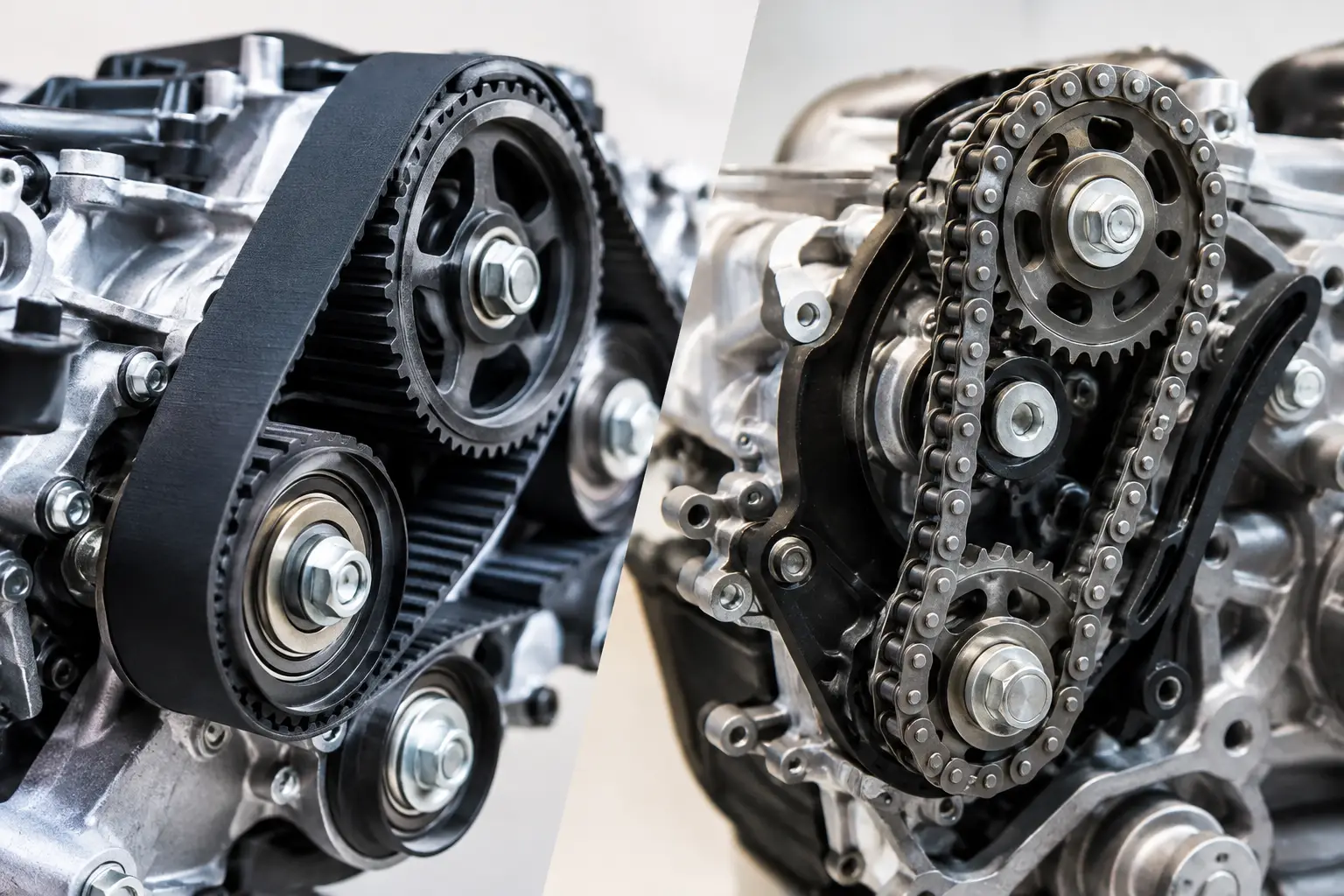
A timing drive failure is not the sort of fault you can put off until next month. If a wet belt or timing chain fails, the engine can lose synchronisation in seconds, often causing serious internal damage and leaving your car or van off the road. The wet belt versus timing chain question matters because the right maintenance approach depends on what is fitted to your engine, how it is used and whether it has been serviced properly.
For a tradesperson, delivery driver or fleet operator, that difference can mean the gap between planned maintenance and an unexpected recovery, missed work and a major repair bill. Neither design is automatically better in every vehicle. What matters is knowing the system your engine uses and acting before wear turns into failure.
What is a wet belt?
A wet belt, also called a belt-in-oil system, is a toothed timing belt that runs inside the engine and is lubricated by engine oil. It performs the same core job as a conventional dry timing belt: keeping the crankshaft and camshaft(s) turning in time so the valves and pistons do not meet.
Manufacturers adopted wet belts to reduce friction, improve refinement and help meet emissions and fuel economy targets. When the belt, oil and servicing are all correct, the system can operate quietly and efficiently.
The problem is that a wet belt is exposed to the oil for its entire life. Incorrect oil, missed oil changes, fuel dilution, repeated short journeys and extended service intervals can all contribute to belt deterioration. As the belt material breaks down, rubber debris can circulate in the oil. On some engines, this can restrict the oil pick-up strainer and lead to low oil pressure, creating a problem well beyond the belt itself.
Wet belt replacement is therefore not simply a case of fitting a new belt. A proper job may involve inspecting the old belt, checking for debris, cleaning relevant components and renewing oil and filters with the exact manufacturer-approved specification. That detail is where many expensive failures are prevented.
Why service history matters more with a wet belt
A service book stamped at the right interval is helpful, but the oil specification matters just as much. Two oils can have the same viscosity on the label yet have different approvals and additive packages. Using an oil that is not approved for a belt-in-oil engine can accelerate deterioration.
If you have bought a used vehicle with incomplete history, do not assume the belt is fine because the engine is running well today. Check the manufacturer’s replacement age and mileage interval for the exact registration and engine code. If the history is uncertain, budgeting for inspection or replacement is usually the safer decision.
How does a timing chain differ?
A timing chain is a metal chain inside the engine, usually driven through guides, sprockets and a hydraulic tensioner. It is lubricated by engine oil and is commonly seen as the tougher, longer-lasting option. In many cases, it is – but it is not maintenance-free and it is not guaranteed to last forever.
Chains wear over time. The chain can stretch, guides can wear or become brittle, and a tensioner may fail to keep the chain correctly tensioned. Poor oil quality, low oil level and stretched oil-change intervals are frequent contributors because the chain and tensioner rely on clean oil and consistent pressure.
A worn chain may start with a metallic rattle, particularly for a moment on cold start. On some engines, it can bring on an engine management warning light or produce camshaft and crankshaft correlation fault codes. Left alone, it may jump a tooth or fail entirely.
Timing chain repairs are often labour-intensive because the chain is housed within the engine, sometimes at the gearbox end. That does not mean every chain rattle needs an immediate full replacement. Proper diagnostics should establish whether the fault is the chain, tensioner, guides, a variable valve timing component, oil pressure issue or something else.
Wet belt versus timing chain: the real comparison
The most useful comparison is not “which lasts longest?” It is “which risks apply to this engine, and what maintenance does it need?” A wet belt normally has a defined replacement interval that should be treated as essential. A timing chain may not have a routine change interval, but it still needs investigation at the first credible sign of wear.
Wet belts can be more predictable when serviced on time using the correct oil. You know the replacement window and can plan the cost around annual servicing or quieter periods at work. Their weakness is that deterioration can affect the lubrication system, particularly where servicing has been poor.
Timing chains are often durable and can give long service, but there is more variation between engine designs and usage patterns. A chain that has seen regular quality oil changes may run well for many years. The same engine, used for short stop-start journeys with neglected servicing, may develop timing issues far sooner.
For van owners, neither system should be judged by internet stories alone. A Transit wet belt, for example, needs a maintenance plan based on the exact engine and manufacturer schedule. Mercedes-Benz van engines with timing chains also benefit from specialist diagnosis when there is noise, a fault code or a drivability concern. The badge on the bonnet does not replace the need for accurate inspection.
Warning signs you should not ignore
A failing timing drive is not always noisy or obvious. With a wet belt, visible belt condition can be difficult to assess because it sits inside the engine. However, unexplained oil pressure warnings, oil contamination concerns, overdue replacement dates or a vehicle with uncertain service history all justify prompt attention.
With a timing chain, listen for rattling or scraping from the engine, especially during cold starts. Rough running, difficult starting, reduced performance and an engine management light can also point to timing-related faults. These symptoms have other possible causes, which is why diagnostics matter before parts are ordered.
Stop driving and seek advice urgently if you have a red oil-pressure warning, significant metallic noise, severe misfiring or a sudden loss of power. Continuing to run the engine can turn a repairable issue into a replacement-engine job.
How to protect either system
The practical answer is simple: follow the manufacturer’s schedule for your specific vehicle, use the exact required oil approval and do not stretch oil changes to save a small amount today. Keep receipts and service records, especially if you rely on the vehicle for work or plan to sell it later.
If your van is doing high mileage, towing, repeated short runs or heavy city work, speak to a technician about whether a more cautious maintenance approach makes sense. Hard use does not automatically mean something is wrong, but it can place more demand on the oil and timing components.
When a wet belt replacement is due, ask what is included. You want clarity on the belt kit, oil and filter, inspection or cleaning for debris where applicable, and any associated components that should be renewed at the same time. For a suspected chain issue, ask for diagnostic findings rather than agreeing to a major repair based on noise alone.
At Van-Tech Fleet Solutions, we see how quickly a planned service can become expensive downtime when timing concerns are ignored. Whether the vehicle needs garage-based work or an initial mobile assessment around Glasgow, the aim is the same: establish what is fitted, diagnose the issue properly and keep disruption to a minimum.
If you are unsure whether your engine has a wet belt or timing chain, check before the next service rather than waiting for a warning light. A quick conversation with the registration details and service history to hand can give you a far clearer plan – and a better chance of staying safely on the road.