
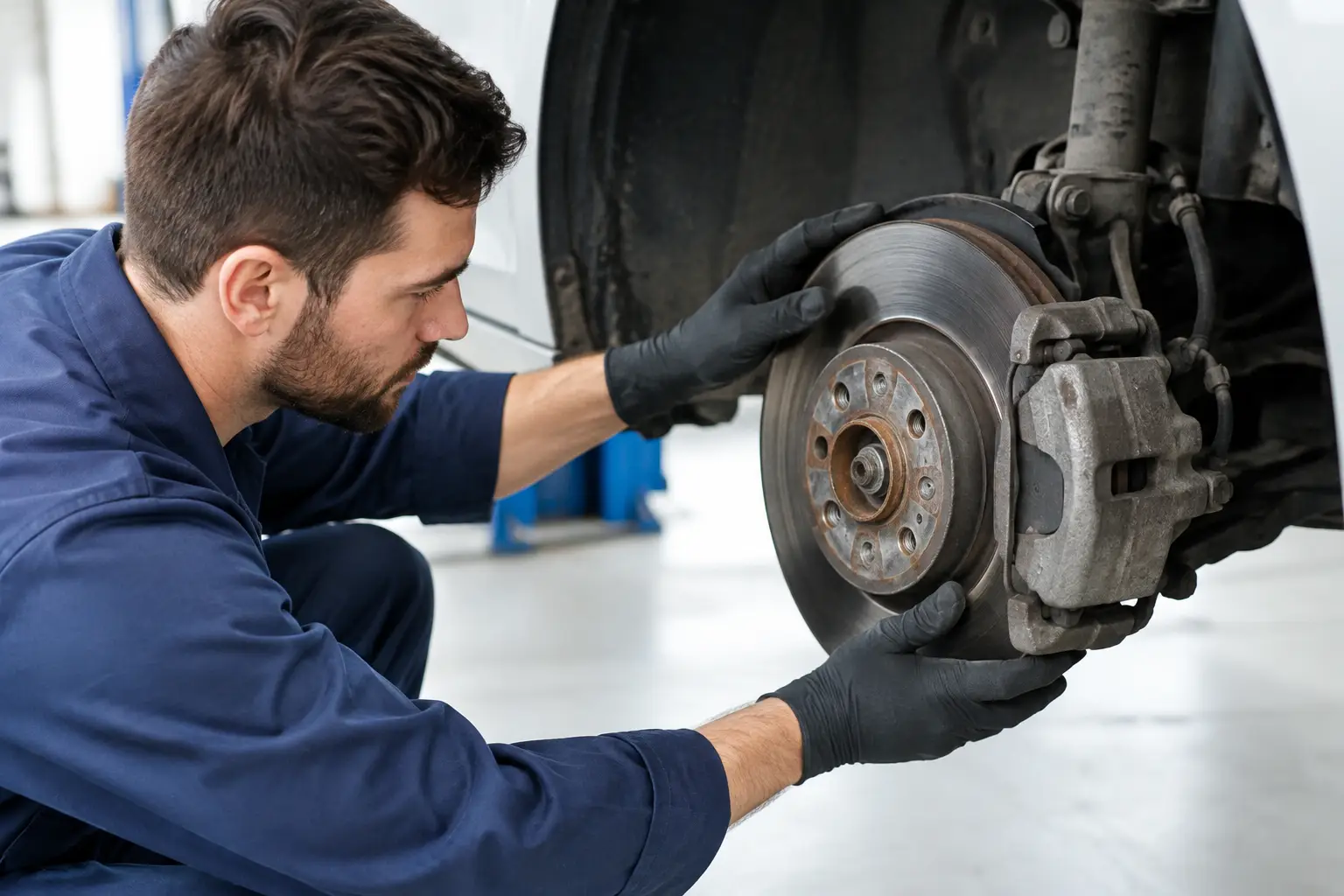
A brake judder can turn a normal stop into a worrying one. You press the pedal and feel a pulsing through your foot, the steering wheel shakes, or the whole van seems to shudder as it slows. If you are asking why brakes judder, the short answer is that the braking surfaces or the parts supporting them are no longer working evenly.
For a private car, that is an inconvenience worth sorting. For a working van, it can mean longer stopping distances, missed jobs and a vehicle off the road when you can least afford it. Brake judder is not something to ignore or simply get used to.
Why brakes judder under braking
Your brake discs rotate with the wheels. When you press the pedal, the brake pads clamp onto those discs and convert movement into heat. Under normal conditions, this happens smoothly. Judder starts when the pads cannot apply even pressure throughout each rotation of the disc, or when another worn component lets the wheel move where it should not.
The most common cause is uneven disc thickness. This is often casually called a warped disc, but the issue is not always a disc that has physically bent. Repeated heavy braking, overheating, poor pad bedding, corrosion or pad material transferred onto the disc can create high and low spots on its surface. Each time the pads pass over those areas, the brake pedal pulses and the vehicle may vibrate.
It is also common to find a combination of faults. A sticking caliper can overheat one disc. Corrosion between a disc and the wheel hub can stop the disc sitting perfectly true. Worn suspension or steering parts can then make a relatively mild brake vibration feel much worse through the steering wheel.
Heat is often part of the story
Vans carrying tools, stock or equipment ask more of their brakes than a lightly loaded car. Regular stop-start routes, steep hills, motorway braking and towing all build heat quickly. If the brakes have been worked hard and then held on firmly while stopped, such as at traffic lights after a long descent, pad material can leave an uneven deposit on a hot disc.
That does not mean every vehicle used for hard work will judder. It does mean correct-quality discs and pads, properly fitted parts and sensible bedding-in matter. Cheap components can be a false economy when they wear unevenly or struggle with repeated heat cycles.
Sticking calipers and seized sliders
A brake caliper needs to release properly after every application. On many vehicles, sliding calipers move on guide pins so that both pads press evenly. If those pins seize or the caliper piston sticks, one pad can stay in contact with the disc.
The result may be a hot wheel, a burning smell, reduced fuel economy, pulling to one side and premature disc wear. By the time a noticeable judder develops, the disc and pads may both need replaced, not just cleaned or adjusted.
Corrosion, especially on vehicles that sit
Glasgow weather, road salt and short journeys are hard on braking systems. Surface rust can form quickly when a vehicle is parked, particularly if it is used infrequently. Light surface corrosion often clears after a few careful brake applications, but heavy pitting can leave the disc face uneven.
Corrosion behind the brake disc is another issue. If rust builds up on the hub face, a new disc may not sit squarely. Even a small amount of run-out can lead to pedal pulsation as the disc turns. This is why thorough hub cleaning and correct fitting procedure are as important as the parts themselves.
Where you feel the judder gives useful clues
The location and timing of the vibration can help narrow down the fault, although it is not a substitute for an inspection.
If the steering wheel shakes mainly when braking, the problem is often at the front of the vehicle. Front brake discs, seized front calipers, worn wishbone bushes, ball joints or track rod ends may be involved. A front-end vibration is especially noticeable because the steering system passes the movement directly to your hands.
If you feel a pulse through the brake pedal, disc thickness variation is a likely suspect. The pedal may rise and fall gently or kick back noticeably under firm braking. Modern ABS systems can also create a pedal pulsation, but that normally happens only when the tyres are losing grip during an emergency stop or on a slippery surface. It should not operate during ordinary dry-road braking.
If the whole vehicle shudders through the seat or floor, rear brake components, rear suspension bushes or a more widespread issue could be at fault. On some vans, a loaded rear axle makes the symptom more obvious. A technician should also check wheel bearings, tyre condition and wheel balance, as not every vibration felt while slowing down comes from the brakes.
Vibration that happens at a particular road speed even when you are not braking points more towards wheel balance, tyre damage, a buckled wheel or drivetrain concerns. If it begins only when the brake pedal is applied, braking and suspension components deserve priority.
Is it safe to drive with brake judder?
It depends on the severity, but a brake judder always merits a prompt check. A slight pulse that has just appeared may not mean immediate brake failure, yet it can develop quickly and may mask another problem. The longer uneven discs or sticking components are left, the greater the chance of damaging pads, calipers, tyres or suspension parts.
Do not continue driving if the vehicle pulls sharply when braking, the pedal feels soft or travels unusually far, a warning light is on, there is smoke or a burning smell, or you hear grinding metal. Stop in a safe place and arrange assistance. Grinding usually means the friction material has worn away or a component is seriously damaged, and every additional mile can raise the repair bill.
For fleet operators, it is worth treating brake complaints as a downtime prevention issue rather than waiting for the next service interval. A driver who reports a pedal vibration early may save the vehicle from a more involved repair and avoid a failed MOT or an unsafe roadside stop.
What a proper brake judder inspection involves
A worthwhile diagnosis is more than a quick look through the alloy wheel. The wheels need to come off so the technician can inspect pad wear, disc condition, caliper movement, hoses, sliders and mounting points. The disc surface may show blue heat marks, scoring, pitting or a pronounced outer lip, but visual checks alone do not always reveal the full cause.
Measuring disc thickness and checking run-out identifies whether the rotating surface is within specification. The hub face should be inspected for rust or debris, while the caliper is checked for free movement and even pad contact. A road test can confirm when the judder occurs, but any test should be carried out carefully and only where the vehicle is safe to drive.
The suspension and steering must not be overlooked. Worn bushes, loose ball joints and tired anti-roll-bar links can allow unwanted movement under braking. Replacing discs and pads without addressing that movement can leave the driver disappointed when the vibration returns.
The right repair is not always just new discs and pads
In many cases, fitting new discs and pads on the affected axle is the correct solution. They should normally be replaced as an axle pair so braking remains balanced from left to right. If a caliper has stuck, however, replacing friction parts alone is unlikely to last. The caliper or slider issue needs rectified first, and the opposite side should be checked carefully too.
There are occasions where discs remain serviceable and the problem lies elsewhere, such as hub corrosion or worn front suspension components. That is why diagnosis matters. It avoids paying for parts that do not solve the cause and gets the vehicle back to dependable braking sooner.
After new pads and discs are fitted, avoid repeated harsh stops unless necessary for the first few journeys. Use controlled, progressive braking to allow the pad and disc surfaces to bed in evenly. Follow any bedding-in guidance supplied for the parts fitted, especially on heavier commercial vehicles.
Preventing brake judder from returning
You cannot prevent every brake fault, but regular checks make a real difference. Have brakes inspected during servicing, particularly before winter, before a long trip or if your van is regularly heavily loaded. Report pulling, squealling, burning smells or changes in pedal feel early rather than waiting for a noise to become constant.
Use parts suited to the vehicle and its workload, and make sure the full braking system is maintained rather than only the visible pads. Brake fluid condition, caliper movement, disc fitting surfaces and suspension wear all play a part in how confidently a vehicle stops.
If your brakes are juddering, arrange an inspection before the issue interrupts your route, your work or your family plans. Van-Tech Fleet Solutions can assess brake and suspension faults at its Uddingston garage or help reduce disruption with mobile support where appropriate. A smooth, straight stop is not a luxury – it is the standard your vehicle should meet every time you press the pedal.