
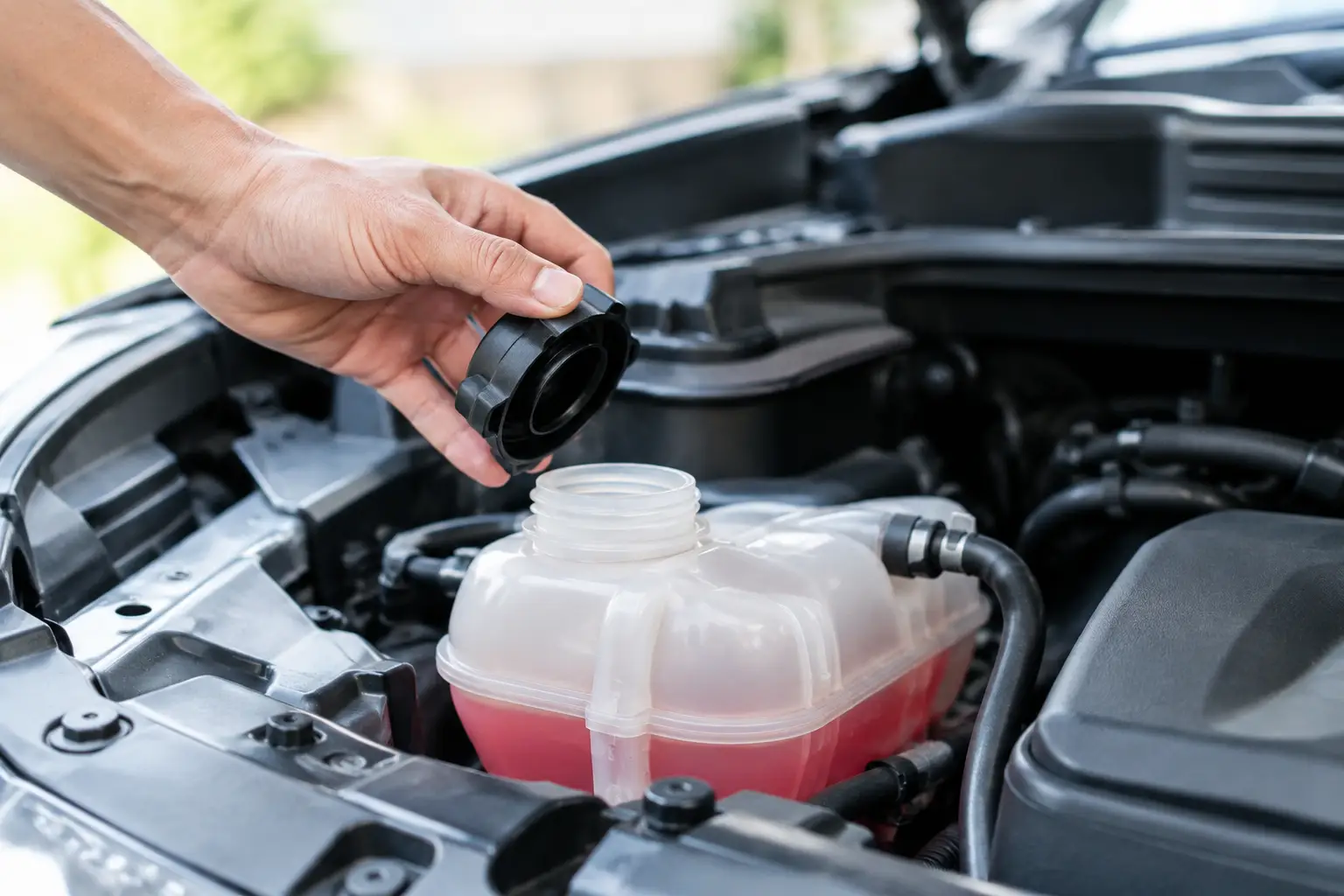
A low coolant level can turn a normal run to a job, delivery or school pick-up into an overheating warning and an expensive repair. Knowing how to check coolant level takes a few minutes, but it must be done safely. Coolant sits in a pressurised system, so checking it at the wrong time can be dangerous.
For most cars and vans, a quick visual check when the engine is cold is enough to spot a problem early. If the level is dropping repeatedly, though, topping it up is not the fix. Something needs investigating.
How to check coolant level safely
Park on level ground, switch the engine off and allow it to cool completely. Ideally, check it before the first journey of the day. If the vehicle has been driven, leave it for several hours. Never remove a coolant cap while the engine is hot or even warm. Hot coolant can spray out under pressure and cause serious burns.
Open the bonnet and find the coolant expansion tank. This is usually a translucent plastic reservoir with a cap carrying a warning symbol, such as a thermometer, steam symbol or wording that warns against opening when hot. It is normally separate from the windscreen washer bottle, which often has a blue cap or a windscreen symbol.
Look at the side of the expansion tank. Most vehicles have MIN and MAX markings, sometimes with raised lines rather than printed words. The coolant should sit between these marks when cold. A level around the middle is generally fine. If it is below MIN, it needs attention before the vehicle is used for anything more than a very short, careful journey to arrange help.
Do not judge coolant condition by colour alone. Pink, orange, blue, green and yellow coolant can all be correct depending on the manufacturer and the product already in the system. Modern long-life coolants are not interchangeable simply because they look similar.
What to do if the coolant is low
First, check the owner’s handbook or the label near the reservoir for the specified coolant type. Use the correct premixed coolant where possible, or mix concentrate only as the product instructions state. The right mixture protects the engine from freezing, corrosion and boiling. That matters in Glasgow winters as much as it does when a van is working hard in traffic or carrying a load.
With the engine cold, loosen the expansion tank cap slowly and top up only to the MAX line. Do not overfill it. Coolant expands as it heats up, and an overfilled reservoir can push fluid out or make a fault harder to diagnose.
If you are stranded and the specified coolant is not available, clean water may be used as a temporary emergency measure only, provided the engine is cold. It should be replaced with the correct coolant mix as soon as possible. Water alone does not provide the corrosion protection or freeze protection your engine needs.
If the level is only slightly below MIN and there are no warning lights, you may be able to top it up and monitor it. If the reservoir is empty, the temperature gauge has risen, or a red coolant warning light is on, do not assume a refill will solve the issue. Avoid driving the vehicle until the cause has been checked.
Why coolant level matters more than most drivers think
Coolant does more than stop an engine overheating. It carries heat away from the engine, helps the heater work, prevents internal corrosion and protects components such as the radiator, water pump and heater matrix. The antifreeze element also stops the fluid freezing in cold weather.
When the level falls, air can enter the cooling system. That can create hot spots inside the engine, reduce cabin heat and lead to erratic temperature readings. In a worst-case situation, continued driving can cause head gasket failure, cylinder head damage or a seized engine. For a working van, that is not just a repair bill – it is lost appointments, missed deliveries and avoidable downtime.
A single small top-up after a long period may not be a concern. Coolant can settle slightly after previous work or a system bleed. Regular top-ups are different. Coolant does not get used up like fuel, so a repeated drop usually points to a leak or another fault.
Signs you may have a cooling system problem
Keep an eye out for damp patches under the front of the vehicle, a sweet smell around the engine bay, steam from under the bonnet or a temperature gauge that climbs above its normal position. You may also notice weak cabin heating, especially if air has entered the system.
Check around visible hoses, the radiator and the expansion tank for crusty white, pink or coloured residue. This can indicate dried coolant from a slow leak. However, many leaks are hidden behind covers, under the engine, around the water pump or inside components that are difficult to inspect without proper equipment.
On modern vehicles, a warning message may say “check coolant level” before the engine overheats. Take that message seriously, even if the vehicle still feels normal. Pull over safely, let the engine cool and inspect the reservoir. Continuing to drive while the coolant warning is active can turn a manageable repair into major engine work.
Do not open the radiator cap on a hot engine
Some older vehicles have a radiator cap as well as, or instead of, an expansion tank cap. The same safety rule applies: do not remove it when hot. The cooling system can remain pressurised for a long time after the engine has stopped.
There is also no need to fill a radiator directly unless the manufacturer’s procedure specifically calls for it. Modern systems are designed to be checked and topped up through the expansion tank. If you are unsure which cap you are looking at, stop rather than guessing. Adding coolant to the wrong reservoir is an easy mistake and can cause further problems.
Coolant checks for vans and fleet vehicles
For vans that earn their keep, make coolant level checks part of a simple weekly walk-around. Do it before a shift, with the engine cold, alongside tyre, oil and light checks. This is especially worthwhile for vehicles doing short-stop delivery work, towing, carrying tools or travelling long motorway miles.
Mercedes-Benz vans, including models with OM651 and OM654 engines, need the correct approved coolant specification. The same applies to every make: using a universal product without checking compatibility can compromise corrosion protection and may cause issues with seals or cooling-system components. If the history of the coolant is unknown, a proper flush and refill may be safer than mixing products.
A fleet manager should also record repeat top-ups. The pattern matters. One vehicle needing a small amount once is not the same as a van needing fluid every week. Tracking it helps identify a developing fault before it causes a breakdown on a busy day.
When to stop driving and call for help
Stop as soon as it is safe if the temperature warning is red, the gauge is in the hot zone, steam is visible, or coolant is pouring out. Turn the engine off and do not pour cold water over a hot engine. Let it cool naturally.
If the coolant reservoir is empty, if you can see a leak, or if the vehicle overheats again after topping up, it needs diagnosis rather than another refill. A technician may need to pressure-test the system, inspect the water pump and thermostat, check the radiator, or test for combustion gases entering the coolant.
For drivers and businesses around Glasgow, Van-Tech Fleet Solutions can investigate cooling faults at the roadside where practical or carry out more involved repairs from the garage. The priority is finding the cause quickly, not repeatedly topping up a system that is losing coolant.
Make a cold-engine coolant check part of your regular routine. It is a small job that can give you an early warning, protect your engine and help keep your car or van where it belongs – on the road.