
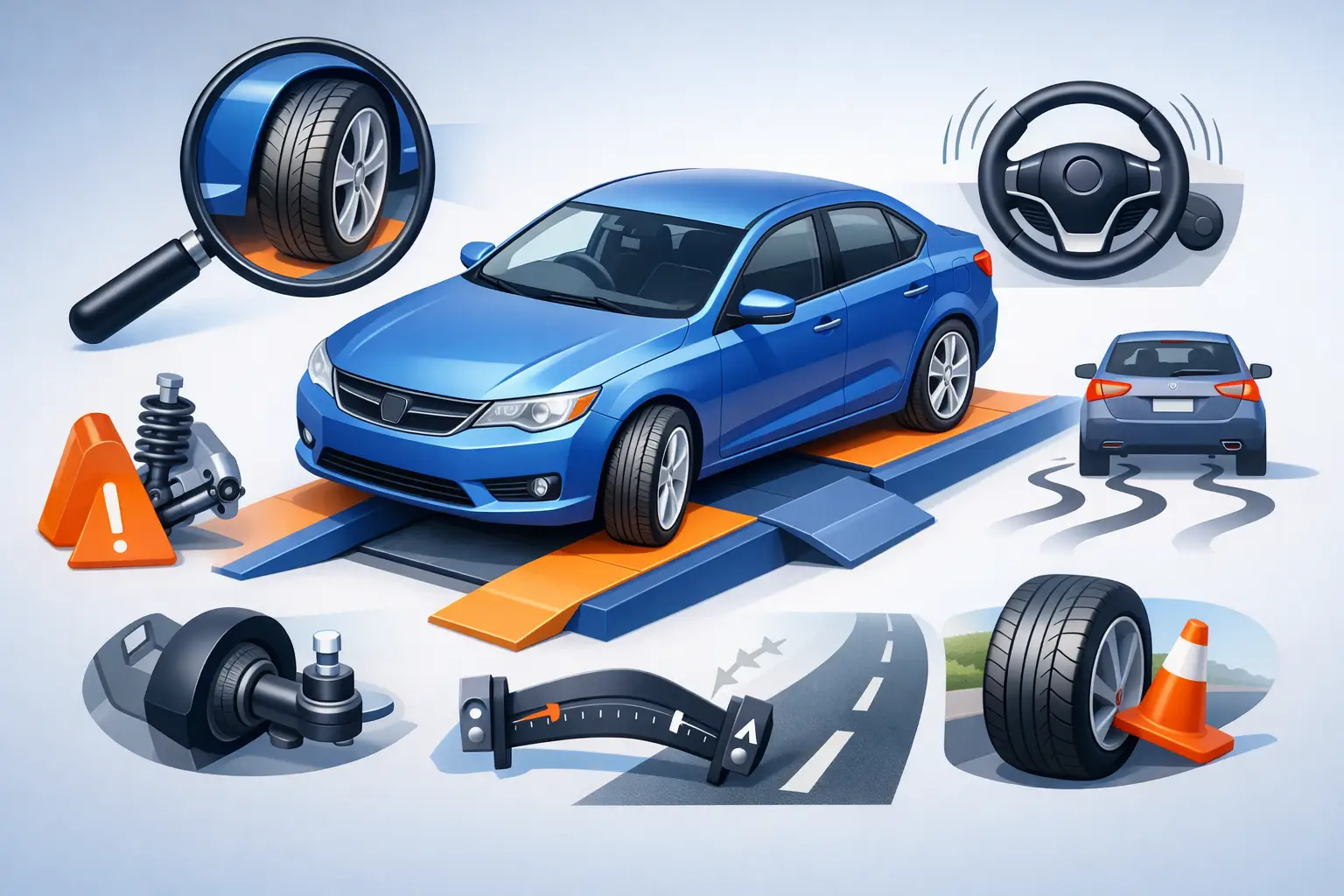
A van that starts drifting across its lane on the M8, or a car that suddenly feels unsettled on familiar roads, is more than an annoyance. It can be the start of an alignment problem that wears through tyres early and makes every mile harder work. Knowing the best signs of wheel misalignment lets you deal with the issue before it becomes an avoidable bill or, worse, a safety concern.
Wheel alignment is the adjustment of the angles at which your wheels meet the road. It is not the same as wheel balancing. Balancing deals with weight distribution around a wheel and is usually linked to vibration; alignment affects how the tyres point, steer and wear. A pothole strike, kerb impact, worn suspension component or heavy load can all knock it out.
The best signs of wheel misalignment
1. Your vehicle pulls to one side
On a level, quiet road, a vehicle with correct alignment should hold a straight course with only light steering input. If your car or van consistently pulls left or right when you relax your grip on the wheel, alignment is a likely cause.
Do not test this by taking both hands off the wheel. Keep control and simply notice whether you are constantly correcting the direction. Road camber can cause a slight drift, so try more than one suitable road before drawing conclusions. A pull can also come from uneven tyre pressures, a sticking brake caliper or a damaged tyre, which is why a proper inspection matters.
2. The steering wheel is off-centre
You are travelling straight ahead, but the steering wheel sits noticeably to the left or right. That is a classic sign the front wheels are not correctly aligned with the vehicle’s centre line.
An off-centre steering wheel may appear after clipping a kerb, hitting a deep pothole or having steering and suspension work carried out. It may not feel urgent at first, but it means the vehicle is not tracking as it should. For tradespeople and delivery drivers covering long daily routes, those small corrections soon become tiring and costly in tyre wear.
3. Tyres are wearing unevenly
Tyres often tell the story before the driver feels a major handling change. Check the tread across the full width of each tyre, including the inner edge, which is easy to miss without turning the steering on full lock or inspecting the vehicle properly.
Wear concentrated on the inside or outside shoulder can point to incorrect camber, while a feathered tread – sharp on one edge of each tread block and smooth on the other – can indicate incorrect tracking or toe. A tyre that has worn bald on one edge is not something to monitor for another few weeks. It needs attention promptly, both for road safety and to avoid replacing tyres before their time.
Uneven wear is not automatically an alignment fault. Underinflation, overinflation, worn shock absorbers and aggressive driving can contribute too. The key point is that tyres should wear broadly and evenly. If they do not, find the cause before fitting fresh rubber.
4. The steering feels loose, heavy or slow to return
A properly set-up vehicle should feel predictable. After turning a corner, the steering should naturally begin to return towards centre, and the vehicle should respond without feeling vague or nervous.
Misalignment can make a van wander, make the steering feel oddly heavy, or leave the wheel reluctant to self-centre after a turn. These symptoms can overlap with worn suspension or steering joints, so do not assume alignment alone is the fix. A technician should check the full system, particularly if you also hear knocks over bumps or feel movement through the steering wheel.
5. You feel vibration through the steering wheel
Steering wheel vibration is more commonly linked to wheel balancing, a bent wheel or tyre damage than alignment itself. However, it deserves a check, especially if it arrives alongside pulling, an off-centre steering wheel or uneven tyre wear.
Notice when the vibration happens. A shake that builds at a particular motorway speed often points towards balancing. A vibration under braking can suggest warped brake discs or another braking issue. Either way, do not keep driving and hope it settles. The correct repair depends on the cause.
6. You have hit a pothole or kerb hard
Glasgow roads can be unforgiving, particularly after poor weather. A sharp pothole impact can shift alignment angles even when there is no obvious damage at the roadside. The same applies to mounting a kerb, catching a traffic island or striking debris.
If the impact was hard enough to make you wince, inspect the tyre sidewall and wheel as soon as it is safe. Watch for a bulge, cut, loss of pressure or visible wheel damage. Then pay attention to how the vehicle drives over the next few journeys. Booking an alignment and suspension check is sensible if anything feels different.
7. Fuel use has crept up without another explanation
Misaligned wheels can create extra rolling resistance because the tyres are effectively being dragged slightly sideways as they roll. The fuel effect may be modest on a short run, but it matters over a fleet’s weekly mileage or a working van’s regular deliveries.
Fuel consumption alone is not a reliable diagnosis. Load weight, traffic, tyre pressure, driving style and engine condition all play a part. But when higher fuel use arrives with tyre wear and a vehicle that will not track straight, alignment should be on the checklist.
8. The vehicle feels unsettled in the wet
Poor alignment reduces the tyre’s ability to meet the road evenly. In wet conditions, that can make an existing fault more obvious: the vehicle may feel less planted, require more steering correction or react more sharply to standing water and rutted surfaces.
This does not mean alignment is the only reason a vehicle feels nervous in rain. Tyre tread depth, tyre age, pressure and suspension condition are just as important. Still, if wet-weather confidence has changed, it is worth having the tyres and geometry assessed rather than waiting for the MOT.
9. New tyres are wearing far too quickly
Fitting new tyres without correcting the reason the old set wore unevenly is false economy. If a tyre shoulder is scrubbed away in a few thousand miles, the alignment could be out, but a bent component or worn ball joint may be preventing it from staying in specification.
This is especially relevant for vans carrying tools, stock or equipment. Regular heavy loads can expose worn suspension parts and alter ride height, affecting wheel angles. Tell the technician how the vehicle is normally used, rather than having it checked as though it is always empty.
What causes wheel alignment to change?
Alignment does not usually drift for no reason. Impacts are common culprits, but everyday wear also plays a part. Track rod ends, control arm bushes, ball joints, wheel bearings and springs all influence how the wheels sit and move. If one of these parts has excessive play, an alignment adjustment alone may not last.
That is why the right approach is inspection first, adjustment second. A garage should assess tyres, steering and suspension, repair any worn or damaged components where needed, then set the alignment to the manufacturer’s specification. On many vehicles, a four-wheel alignment check gives the clearest picture because rear-wheel geometry can affect how the vehicle tracks as well.
When should you book an alignment check?
Book one after a significant pothole or kerb strike, after replacing steering or suspension parts, when fitting tyres if the old ones wore unevenly, or whenever the vehicle begins pulling or steering differently. You do not need to wait until a tyre is ruined.
For fleet vehicles, add tyre and alignment checks to planned maintenance rather than relying on drivers to report a problem once it is severe. A quick inspection can prevent a van losing a day to damaged tyres, poor handling or an unexpected roadside issue.
If your car or van is pulling, wearing tyres unevenly or no longer feels right on the road, get it checked while the symptoms are still small. Van-Tech Fleet Solutions can assess the cause and help get you back to safe, straight-running motoring with as little disruption as possible.