
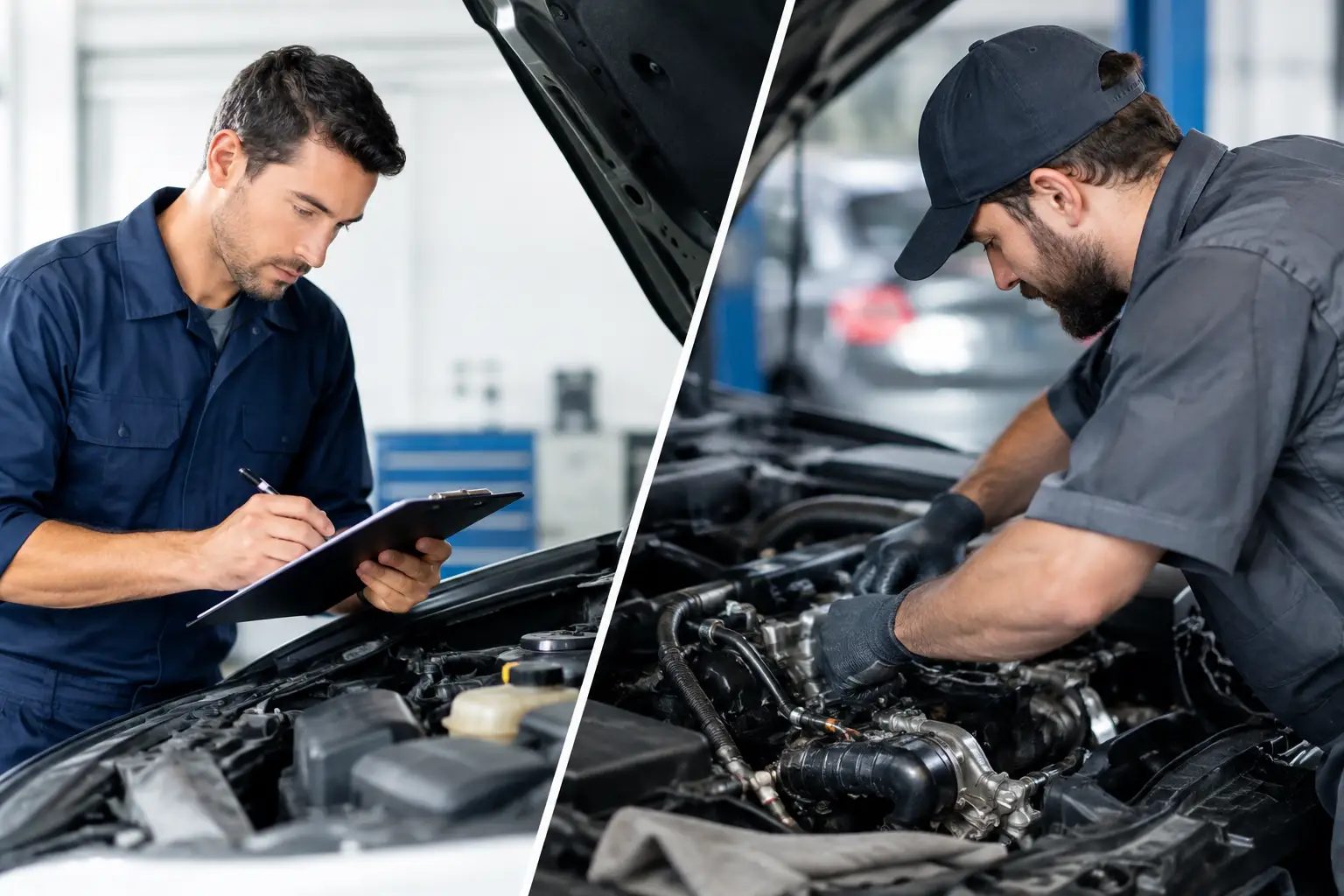
A van that will not start at 7am is not just an inconvenience when you have customers waiting, tools to deliver or a full day of jobs booked in. It can mean missed work, frustrated clients and a repair bill that lands at exactly the wrong time. That is the real difference between preventive servicing versus reactive repairs: one approach gives you a chance to plan, while the other usually forces you to react under pressure.
For private drivers, regular maintenance protects safety and avoids avoidable disruption. For tradespeople, delivery businesses and fleet operators, it also protects revenue. The aim is not to replace parts for the sake of it. It is to spot wear early, service the vehicle to the manufacturer’s requirements and deal with small faults before they become a breakdown at the roadside.
Preventive servicing versus reactive repairs: the practical difference
Preventive servicing is planned vehicle maintenance. It follows a time or mileage interval and includes checks, fluid changes, filters and inspections that help keep the vehicle operating as it should. A proper service can reveal early brake wear, a weakening battery, a coolant leak, damaged tyres or fault codes before they stop the vehicle altogether.
Reactive repair happens after something has failed or become impossible to ignore. The warning light is on, the brakes are grinding, the van has lost power or it will not start. Sometimes reactive work is unavoidable – a puncture, impact damage or an electrical component can fail without much warning. But many expensive repairs begin as small, detectable issues that have been left too long.
The difference is often most obvious in the diary. Planned servicing can be booked around quieter days, holidays or shift patterns. A breakdown decides the timing for you. It may involve recovery, a missed appointment, rearranged work and a vehicle off the road while parts are sourced.
Why planned servicing usually costs less over time
A service is an upfront cost, so it can be tempting to delay it when the vehicle seems to be driving normally. The problem is that modern cars and vans can hide faults well until the point where they cannot. By then, one worn component may have damaged another.
Take engine oil as an example. Old or degraded oil does not always create an immediate warning sign, but it can reduce protection for internal engine components. Ignoring oil and filter intervals can lead to contamination, poor running and premature wear. On diesel vans working hard around Glasgow, frequent short trips, heavy loads and stop-start use can make correct maintenance even more valuable.
Brakes follow the same pattern. Replacing worn pads in good time is straightforward. Allowing them to wear down to metal can damage the discs and compromise braking performance. A small coolant leak can be repaired before it causes overheating. A tired auxiliary belt can be changed before it snaps and leaves you stranded.
Preventive servicing does not guarantee that nothing will ever go wrong. What it does is reduce the chances of predictable failures and gives a technician the opportunity to identify work before it becomes urgent and more costly.
Downtime is often the biggest cost for a working van
The invoice is only one part of a reactive repair. If your van is your workshop, store room or means of getting to every customer, every hour off the road has a knock-on effect. You may lose a day’s takings, pay for alternative transport, move jobs or let down a customer you have worked hard to retain.
That is why fleet maintenance should be based on availability as much as mechanical condition. A sensible service plan lets you group work together where appropriate, schedule inspections before busy periods and keep a record of what has been done. It also makes it easier to budget for tyres, brakes, servicing and known wear items rather than being hit by repeated emergencies.
For a one-van business, the same principle applies. You may not have spare vehicles waiting, so a short planned visit is usually far easier to manage than an unexpected day lost to a breakdown. Mobile servicing can be particularly useful where suitable, bringing routine maintenance and diagnostics to your home, workplace or yard and reducing time spent travelling to a garage.
What a proper service can identify early
A service should be more than an oil change and a stamp in the book. The exact work depends on the vehicle, its mileage, age and manufacturer schedule, but an effective inspection looks for the issues that affect reliability and safety.
A technician may find uneven tyre wear that points to alignment or suspension trouble, brake components nearing their limit, fluid leaks, deteriorating hoses, battery weakness, worn wiper blades or fault codes stored in the vehicle’s system. Air conditioning performance can also be checked before a small leak or failing component turns into a summer problem.
For commercial vehicles, use matters as much as age. A lightly used van doing motorway miles may need different attention from one covering short urban runs, carrying weight and starting repeatedly throughout the day. Be honest about how the vehicle works. It helps the technician advise on sensible intervals rather than applying a one-size-fits-all approach.
Specialist engines need specialist attention
Some jobs have specific known risks and should not be postponed. Mercedes-Benz vans with OM651 or OM654 engines benefit from informed diagnostics and maintenance, particularly where warning lights, starting issues, DPF concerns or performance changes are involved. The right diagnostic approach can prevent parts being replaced on guesswork.
The same is true for Ford Transit wet belt replacements. This is planned maintenance with a clear purpose: dealing with a time-sensitive component before belt deterioration causes major engine damage. It is not a job to leave until symptoms appear, because the first clear symptom can be a serious failure.
When reactive repairs are the right call
There is no point pretending every fault can be predicted. A stone can damage a radiator, a tyre can pick up a nail and electrical parts can fail suddenly. When that happens, the priority is a safe, accurate diagnosis and a repair that gets you back on the road without unnecessary delay.
Reactive work is also appropriate where a fault is already present. If a warning light comes on, the steering feels different, the engine is overheating, you hear grinding from the brakes or the vehicle loses power, do not wait for the next service. Continuing to drive can turn a manageable issue into a bigger repair, and in some cases it is unsafe.
The best approach is not servicing or repairs. It is planned maintenance as the foundation, with responsive repair support when the unexpected happens. Van-Tech Fleet Solutions Ltd provides both mobile assistance and garage-based work, which means routine servicing, diagnostics and more involved repairs can be handled according to what the job actually needs.
How to make a maintenance plan that works
Start with the manufacturer’s recommended schedule, then factor in how your vehicle is used. Check the service book, digital service history and any previous invoices. If you have recently bought a used car or van with uncertain history, arranging an inspection and baseline service can be a sensible way to take control of future maintenance.
Between services, pay attention to changes. Check tyre condition and pressures regularly, monitor fluid levels where appropriate and do not ignore dashboard warnings. A change in starting behaviour, fuel economy, braking feel, smoke, vibration or noise is worth investigating early. It may be minor, but it is cheaper to establish that before a fault worsens.
For fleets, keep each vehicle’s servicing, MOT dates, tyre condition and repair history in one place. The record does not need to be complicated. It needs to be used. A clear schedule helps prevent vehicles slipping past due dates and gives you evidence of responsible maintenance when it comes time to sell, lease return or review operating costs.
The decision that keeps vehicles earning
Reactive repairs will always be part of vehicle ownership. The goal is not perfection; it is fewer surprises, faster decisions and less time stranded when work needs done. Planned servicing gives you more control over cost, safety and downtime, while prompt repairs deal with the failures no one could reasonably see coming.
If your car or van is due a service, has a warning light on or simply has not had a proper check in a while, deal with it before the next busy week decides for you. A straightforward inspection now can be the difference between a booked appointment and a lost day on the road.