
A brake pedal that feels different, a van that pulls to one side, or a new knock over Glasgow’s rougher roads is not something to put off until the next service. Brake and suspension checks Glasgow drivers arrange early can prevent a straightforward repair becoming an unsafe breakdown, an MOT failure, or unwanted time off the road.
For a tradesperson, courier or small fleet operator, that downtime has a direct cost. For family drivers, it is about knowing the vehicle will stop, steer and handle as it should in rain, traffic and emergency situations. The good news is that most brake and suspension faults give warning signs before they become serious – if you know what to look and listen for.
When to book brake and suspension checks in Glasgow
There is no fixed mileage at which every car or van needs the same brake or suspension work. Driving conditions, vehicle load, road surfaces and maintenance history all matter. A lightly used car on mainly motorway miles will wear differently from a loaded van making repeated stops around the city.
Book a check promptly if braking feels less confident than normal. That may mean a soft or spongy pedal, a pedal that travels further than it used to, vibration through the steering wheel under braking, squealing, grinding, or the vehicle pulling left or right. A brake warning light also needs attention without delay.
Suspension problems can be less obvious at first. You may notice knocking over potholes and speed bumps, a bouncy or unsettled ride, uneven tyre wear, poor steering response, or the vehicle sitting lower at one corner. If the front end dips sharply when braking, or the vehicle feels unstable in bends, get it inspected rather than adapting your driving around the problem.
A visual check at home can help you spot a concern, but it is not a replacement for proper inspection. Wheels, brakes and suspension components work together, and the cause of a noise or vibration is not always where it first appears to be.
What a proper brake inspection should cover
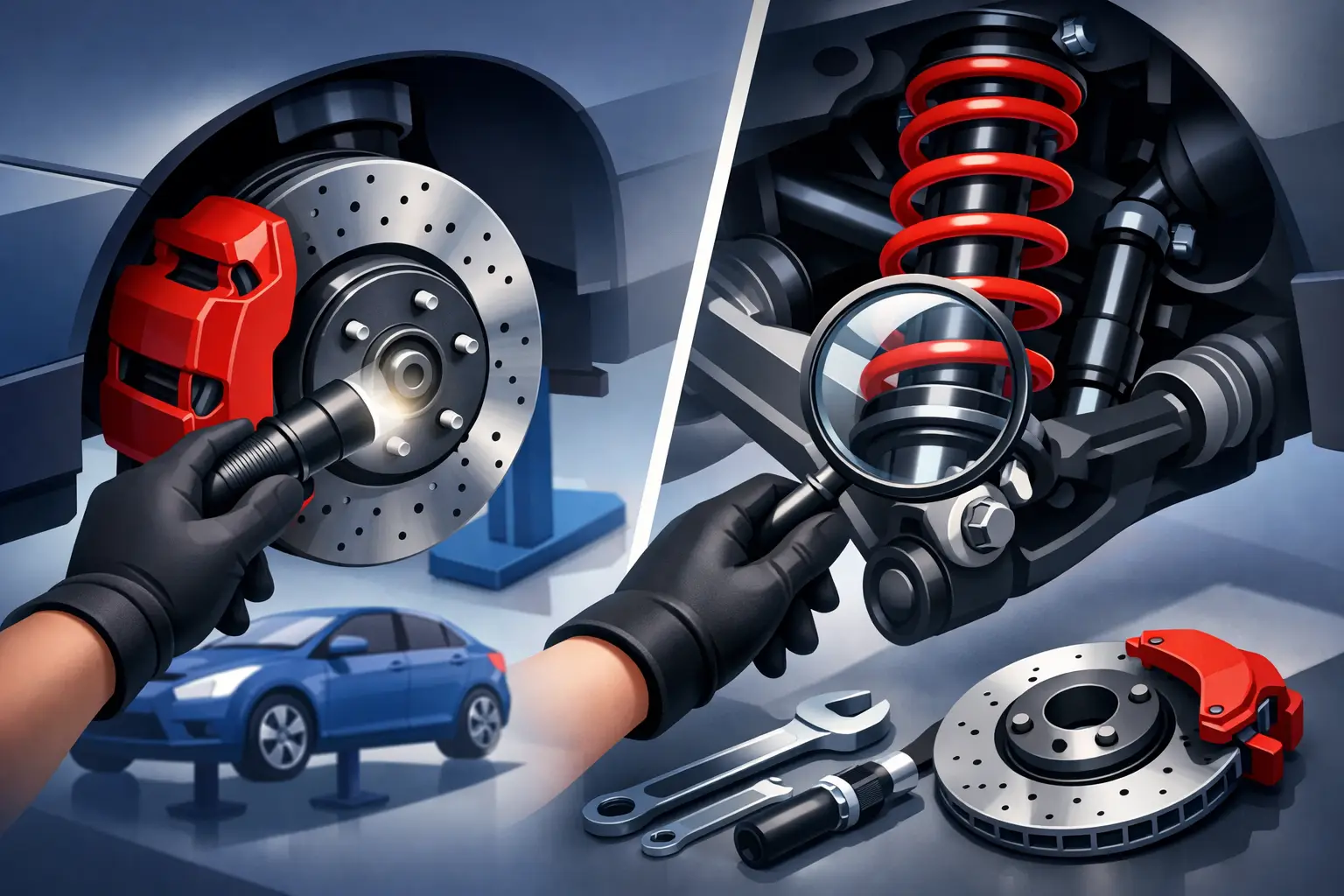
Brakes are more than pads and discs. A worthwhile check looks at the condition and remaining thickness of brake pads, disc wear and corrosion, caliper operation, flexible brake hoses, brake fluid condition and visible leaks. The technician should also assess whether the vehicle is braking evenly and whether any warning lights or fault codes need further diagnosis.
Pads naturally wear down, while discs can become scored, corroded or develop a lip around the edge. Replacing pads at the right time can be relatively simple. Leaving worn pads until metal contacts the disc can damage other components and raise the final bill.
Brake fluid deserves attention too. It absorbs moisture over time, which can reduce its effectiveness under hard braking and contribute to internal corrosion. The correct replacement interval varies by manufacturer, so the vehicle’s service schedule should guide the decision rather than guesswork.
Not every squeal means brakes need replacing immediately. Surface corrosion after the vehicle has been parked, especially in wet weather, can make noise for the first few stops. But persistent noise, grinding, vibration or reduced stopping confidence should always be checked.
Why vans need closer attention
Vans often work harder than cars. Tools, stock, equipment and frequent stop-start driving put extra demand on brakes. A vehicle that is usually unladen may handle very differently once it is carrying a full day’s kit.
That does not mean replacing parts before they are worn. It means inspecting the vehicle with its real working conditions in mind. The right repair is the one that restores safe, reliable operation while avoiding unnecessary expense and repeat downtime.
What suspension checks involve
Suspension keeps tyres in contact with the road, supports vehicle weight and helps control body movement. It includes springs, shock absorbers or struts, top mounts, bushes, ball joints, anti-roll-bar links and associated steering components. Wear in one area can place added strain on another.
During an inspection, a technician will look for broken or sagging springs, leaking dampers, worn bushes, excessive play in joints, damaged mounts and loose fittings. Tyre condition provides useful clues too. Feathering, uneven wear across the tread or wear concentrated on one edge can point to alignment, steering or suspension issues.
A broken spring is a common reason to act quickly. It may be noticed as a change in ride height, a sharp noise, tyre damage in more severe cases, or an MOT advisory before it becomes a failure. Continuing to drive with a damaged spring can affect handling and cause further damage, so it is not a job to leave for later.
Shock absorbers do not always fail suddenly. They can lose performance gradually, making the change difficult to notice when you drive the vehicle every day. Longer stopping distances on uneven surfaces, more body roll and reduced control in wet conditions are all reasons to have the system assessed.
Brakes, suspension and tyres are connected
It is tempting to treat these as separate jobs, but they affect each other every time the vehicle moves. Worn suspension can reduce tyre contact with the road. Poor alignment can wear tyres prematurely. Uneven braking can make a steering or suspension issue more noticeable.
That is why a repair should start with a clear diagnosis rather than simply changing the most obvious part. For example, fitting new tyres without addressing worn suspension components or incorrect alignment may only lead to another set wearing unevenly. Equally, a vibration under braking might be related to disc condition, but wheels, tyres and suspension should be considered before assuming the answer.
Mobile check or garage repair?
A mobile mechanic is often the practical choice when a vehicle is parked at home, on site or at a workplace and you need to avoid losing half a day travelling to a garage. Straightforward inspections and many repairs can be carried out where the vehicle is, depending on safe access, weather and the work required.
Some faults are better handled in a garage. Jobs needing a ramp, seized components, specialist equipment, wheel alignment or deeper diagnostic work are usually safer and more efficient in a properly equipped workshop. A reliable service should advise which option makes sense, rather than forcing every job into the same approach.
Van-Tech Fleet Solutions Ltd combines mobile support with garage-based repair in Uddingston, helping Glasgow drivers and fleet operators choose the route that gets their vehicle back on the road with the least disruption.
Do not wait for the MOT to find the problem
An MOT is a safety inspection, not a maintenance plan. It can identify worn brakes, damaged suspension parts and tyre concerns, but waiting until test time may leave little room to organise repairs around your work. It can also mean a vehicle is off the road at exactly the wrong moment.
If an MOT advisory mentions brake wear, corrosion, suspension play, a leaking damper or tyre wear, use it as a prompt to book a proper assessment. Advisories vary in urgency, so ask what was found, how it affects safe driving and whether the repair can sensibly be planned or needs doing now.
Keeping a simple record of servicing, advisories, tyre replacements and recurring noises is particularly useful for vans and small fleets. It makes patterns easier to spot and gives you a clearer picture of likely costs before an issue becomes urgent.
If your vehicle is pulling, knocking, vibrating or taking longer to stop, trust the change you have noticed. Arrange a brake and suspension check while the repair is still manageable, and you are far more likely to protect your safety, your tyres and your working day.